
Prototype to Production: Why the Manufacturing Process Should Evolve as Your Product Grows
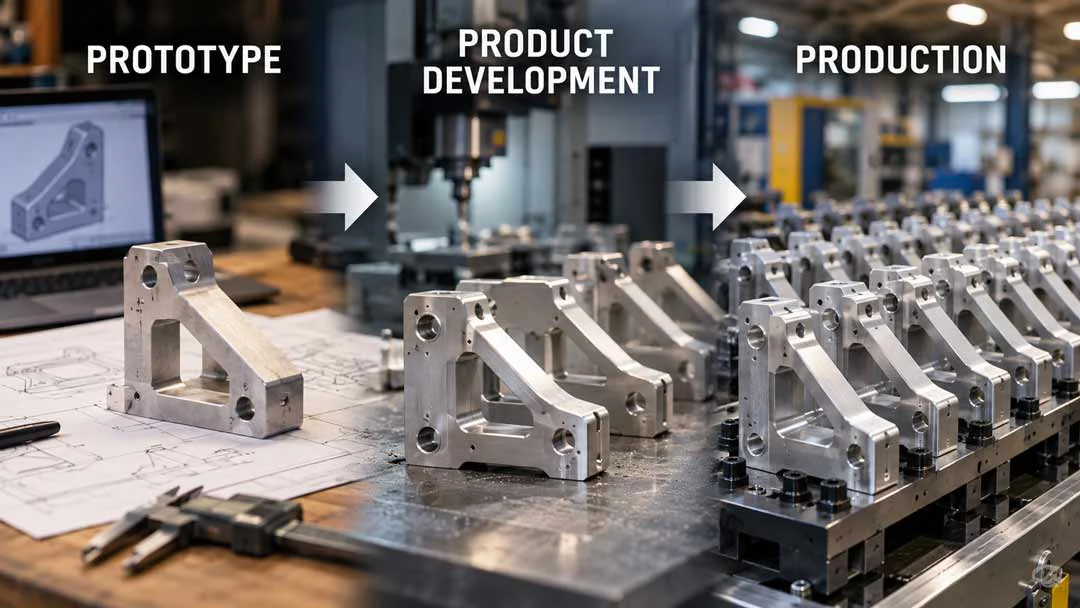
From a Working Prototype to Repeatable Production
Every successful product starts somewhere.
Maybe it’s a napkin sketch. A CAD model. A 3D print. A single prototype machined from a block of aluminum.
In the early stages of product development, the goal is not to build the perfect manufacturing process. The goal is to prove that the product works.
Speed matters. Flexibility matters. Engineering changes happen almost daily.
At this stage, machining a part from billet is often exactly the right decision.
But what happens when your prototype becomes a product?
When orders increase from ten pieces to hundreds, and eventually thousands, the manufacturing process that helped you launch your product may become the biggest obstacle to growth.
At that point, the manufacturing process should evolve along with the product.
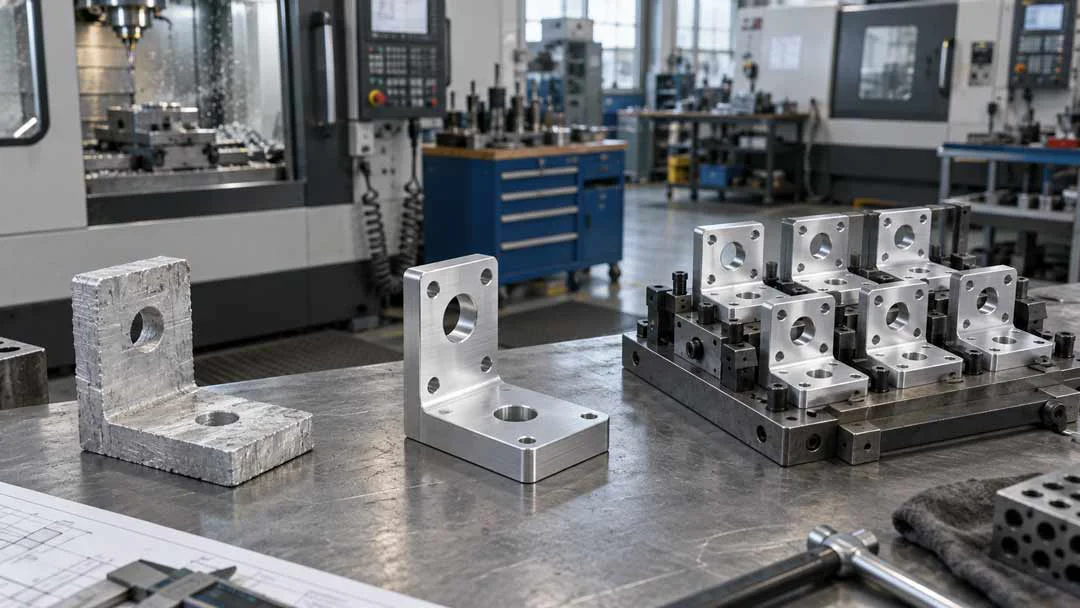
Prototype Manufacturing Solves Different Problems
During product development, flexibility is everything.
Designs change. Features move. Tolerances are adjusted. New ideas are tested.
The ability to make those changes quickly is often far more valuable than producing the lowest possible cost per part.
That is why CNC machining is such a powerful prototyping tool.
A part can be programmed, machined, inspected, modified, and produced again without investing in dedicated tooling or specialized manufacturing processes.
For prototypes and low-volume production, that is exactly what you want.
Production Changes the Equation
Once a product enters production, the priorities begin to change.
Engineering changes become less frequent. Demand becomes more predictable. Lead times matter. Manufacturing capacity matters. Profit margins matter.
Instead of asking, “How quickly can we build this?” the question becomes, “How efficiently can we build this 10,000 times?”
Those are two completely different engineering problems.
Unfortunately, many products continue being manufactured exactly the way they were prototyped.
Over time, those decisions become expensive.
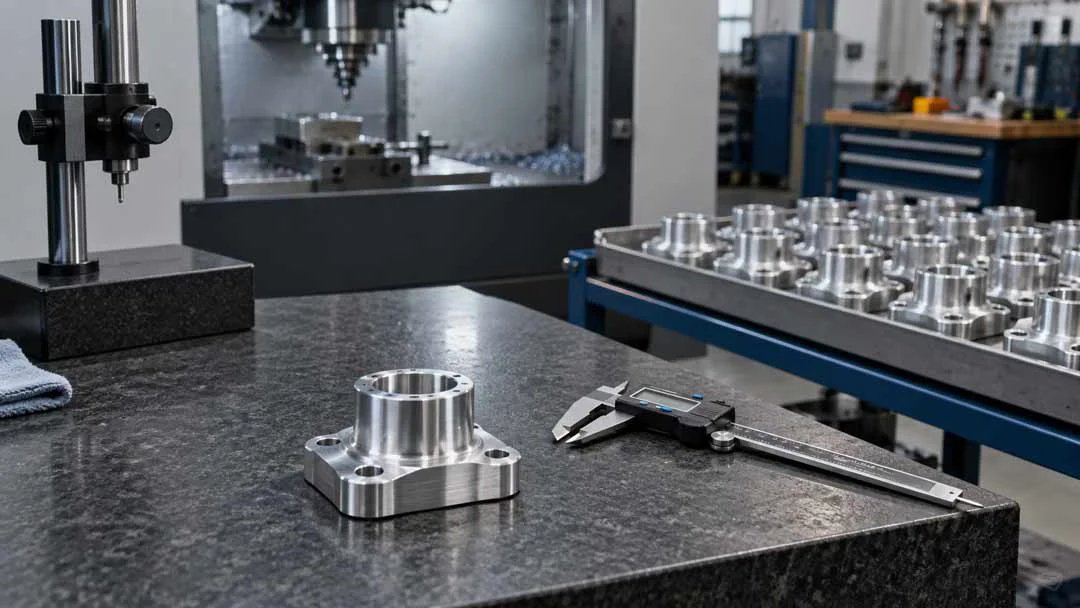
Signs Your Manufacturing Process May Need to Change
One of the biggest opportunities we see is when companies continue using prototype manufacturing methods long after their products have matured.
- Cycle times continue increasing as demand grows.
- Machining removes large amounts of unnecessary material.
- Multiple machining operations could be combined.
- Operators spend significant time loading, indicating, or repositioning parts.
- Production requires more machine capacity than expected.
- Material costs and tooling consumption continue climbing.
None of these necessarily indicate a design problem.
They often indicate a manufacturing opportunity.
Manufacturing Is More Than Machining
One of the biggest misconceptions about production manufacturing is that success depends on faster machines.
In reality, success usually comes from better manufacturing strategy.
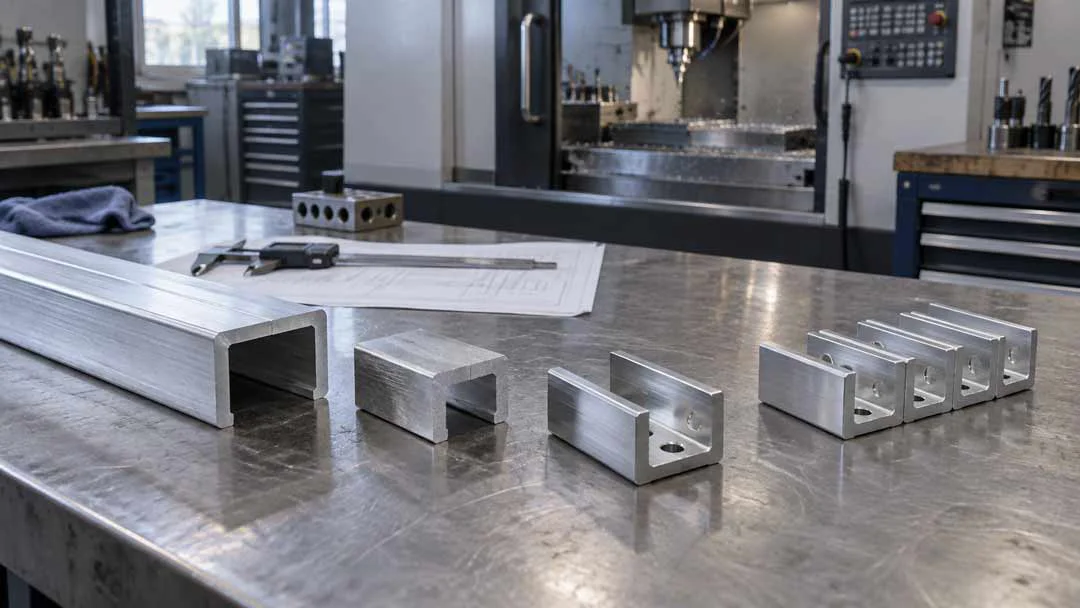
Sometimes that means redesigning a component around an aluminum extrusion.
Sometimes it means roughing difficult materials with a waterjet before finish machining.
Sometimes it means redesigning workholding to reduce setup time.
Sometimes it means changing the machining sequence entirely.
The goal is not simply to make chips faster.
The goal is to eliminate unnecessary work altogether.
Every minute removed from a production cycle reduces cost, not just once, but every time that part is manufactured.
Process Engineering Creates Competitive Advantage
At Genoa Tool & MFG, we spend as much time thinking about the machining process as we do machining.
Before a machine ever begins cutting material, we are evaluating questions like:
- Is this the right material?
- Is this the most efficient manufacturing method?
- Could an extrusion eliminate machining?
- Could waterjet reduce spindle time?
- Can workholding be simplified?
- Can multiple operations be combined?
- Is this process ready for production volumes?
Those decisions often have a greater impact on manufacturing cost than simply reducing cycle time by a few seconds.
The best manufacturing process is not always the one that uses the fewest machines.
It is the one that delivers consistent quality with the least amount of unnecessary work.
Experience Matters
One advantage that is somewhat unique to Genoa Tool & MFG is that we have experienced both sides of manufacturing.
We are not only a contract manufacturer.
We have developed, manufactured, marketed, and sold our own products.
That means we have faced the same challenges our OEM customers face.
We have built prototypes.
We have invested in tooling.
We have redesigned products to improve manufacturability.
We have developed fixtures.
We have increased production capacity.
We have learned where it is worth investing, and where it is not.
Most importantly, we have learned that manufacturing processes should evolve as products grow.
Those experiences shape how we approach every customer project.
Building Products That Are Ready to Scale
One of the most rewarding parts of manufacturing is helping a customer move beyond the prototype stage.
It is exciting to watch a product gain traction in the marketplace.
But success also creates new manufacturing challenges.
The process that made sense for fifty parts often is not the process that makes sense for five thousand.
Recognizing that transition, and adapting the manufacturing process accordingly, is where engineering experience creates real value.
Sometimes the solution is simple.
Sometimes it requires a complete redesign of the manufacturing process.
Either way, the objective remains the same.
Produce better parts. More efficiently. With a process that is ready to grow alongside the business.
Have a Part That Could Be Manufactured More Efficiently?
Whether you are trying to reduce machining costs, improve manufacturability, or prepare a product for higher production volumes, our engineering team is happy to review your design.
Upload your drawings through our online RFQ system or request an engineering review. Even if you are early in the design process, we will help evaluate opportunities to reduce manufacturing cost, improve throughput, and build a process that’s ready to scale.