How Custom Aluminum Extrusions Reduce Manufacturing Costs and Make Production Easier to Scale
When Growing Demand Calls for a Different Manufacturing Approach
Many products begin life exactly the way they should: with a piece of plate or bar stock and a CNC machine.
When you’re building prototypes or producing small quantities, machining a part from solid material is often the fastest and most economical approach. It allows designs to evolve quickly without investing in specialized tooling.
But what happens when your product succeeds?
What starts as a few dozen parts can quickly become hundreds, then thousands. Suddenly, the manufacturing process that made sense during development becomes the biggest obstacle to growth.
At that point, the question changes from “Can we machine this?” to “Is this still the best way to manufacture it?”
For many products, the answer is no.
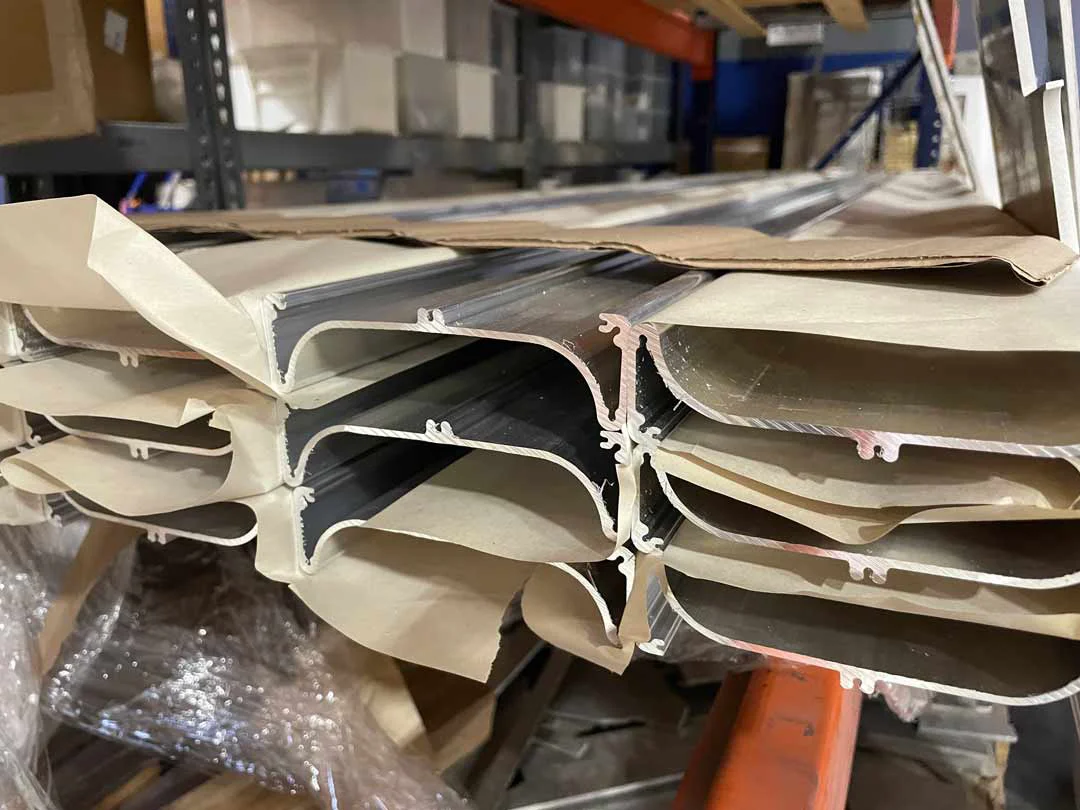
A custom aluminum extrusion can dramatically reduce machining time, improve consistency, lower manufacturing costs, and make production far easier to scale.
When Does a Custom Aluminum Extrusion Make Sense?
One of the biggest misconceptions we encounter is that custom aluminum extrusions are only practical for massive production runs.
In reality, they’re often far more accessible than engineers, product designers, and purchasing teams expect.
Many people assume a custom extrusion requires a large tooling investment or that the raw material costs significantly more than standard aluminum plate or bar stock. While every project is different, custom extrusion tooling is frequently much more economical than people realize, and the material itself is often surprisingly competitive with conventional aluminum stock.
The real question usually isn’t:
“Can we afford to use an extrusion?”
It’s:
“How much machining can we eliminate by using one?”
If your part has:
- A consistent cross-sectional profile
- Long features that repeat throughout the length of the part
- Significant material removal from plate or bar stock
- Production volumes that are moving from hundreds into thousands of pieces
…it may be an excellent candidate for a custom aluminum extrusion.
Instead of machining away large amounts of material, the aluminum mill produces a profile that already contains most of the finished geometry.
Now your machining centers only need to produce the precision features: holes, tapped holes, pockets, end machining, and critical tolerances.
The result is:
- Less machining
- Less material waste
- Shorter cycle times
- Better production capacity
- Lower overall manufacturing costs
Reducing Machining Time Creates Room to Scale
Reducing machining costs is often the first benefit engineers think about.
It’s certainly an important one.
But in our experience, production scalability is often the even greater advantage.
As production volumes increase, manufacturing capacity becomes just as important as piece price.
A process that works well for 100 parts may struggle when demand grows to 5,000 or 50,000.
Cycle times become bottlenecks.
Machine availability becomes limited.
Lead times begin to grow.
By moving much of the geometry into the extrusion itself, manufacturers dramatically reduce the amount of machining required for every component.
That means more finished parts can be produced using the same equipment, the same workforce, and often within the same production schedule.
For growing companies, that additional manufacturing capacity can be every bit as valuable as the direct cost savings.
Look Beyond Material and Tooling Costs
When evaluating manufacturing methods, it’s easy to focus on the cost of the aluminum or the price of the extrusion tooling.
In reality, those expenses are often only a small part of the total manufacturing equation.
The largest savings frequently come from reducing spindle time, simplifying workholding, minimizing material waste, improving tool life, and increasing throughput over the life of the program.
We’ve found that many products become excellent candidates for custom extrusions much earlier than their designers originally expected.
A brief engineering review is often enough to determine whether a redesign could significantly improve manufacturing efficiency without changing the function of the finished product.
Build the Manufacturing Process Around the Profile
Designing a good extrusion profile is important.
Designing an efficient manufacturing process around that profile is where the real value is created.
In fact, we’ve found that many companies continue machining parts from solid aluminum simply because no one has ever suggested there might be a better manufacturing approach.
Long extrusions can flex.
Profiles can twist.
Thin walls require proper support.
Fixtures need to locate the material consistently without introducing distortion.
Secondary machining operations must remain repeatable over thousands of production cycles.
Without careful process development, the potential advantages of an extrusion can disappear quickly.
This is where experience makes the difference.
At Genoa Tool & MFG, we don’t simply machine aluminum extrusions.
We help engineer products around them.
That process often begins long before the first part is manufactured.
We work with customers to evaluate whether an extrusion is the right manufacturing solution, assist in designing extrusion profiles that balance functionality with manufacturability, source the material through trusted extrusion partners, and develop machining and workholding strategies that support efficient, repeatable production.
The goal isn’t simply to produce a good first article.
It’s to build a manufacturing process that continues producing quality parts consistently, whether the production run is 500 pieces or 50,000.
Experience From Manufacturing Our Own Products
One advantage that’s somewhat unique to Genoa Tool & MFG is that we don’t just manufacture extrusion-based products for our customers.
We’ve built our own products around them.
Through our sister company, Ketch Products, we’ve manufactured and sold millions of dollars of aluminum extrusion-based products directly to end users.
That experience forced us to solve the same challenges our OEM customers face every day.
How do you reduce machining time without sacrificing quality?
How do you design fixtures that maintain repeatability while keeping cycle times low?
How do you maintain tight tolerances across thousands of parts?
How do you keep manufacturing costs stable as demand continues to grow?
Those aren’t theoretical engineering questions.
They’re production challenges we’ve solved in our own manufacturing operation.
That perspective allows us to bring practical manufacturing knowledge, not just machining capability, to every extrusion-based project we take on.
Evaluate How the Part Is Manufactured
Many machine shops focus on building parts exactly as they’re drawn.
There’s certainly value in that.
But sometimes the greatest opportunity isn’t improving how the part is machined.
It’s improving how the part is manufactured.
A properly designed extrusion can eliminate unnecessary operations, improve repeatability, reduce material waste, and make production significantly easier to scale as demand grows.
Those decisions don’t just affect the next production run.
They influence the total manufacturing cost of the product for years to come.
If you’re machining a component from solid aluminum and production volumes continue to grow, it may be worth evaluating whether a custom extrusion could reduce cost, improve throughput, and simplify manufacturing.
Sometimes billet machining remains the right solution.
Sometimes a custom extrusion creates a substantial manufacturing advantage.
The key is knowing the difference.
At Genoa Tool & MFG, we’ve helped customers identify opportunities where thoughtful engineering and smarter manufacturing processes reduce machining time while improving long-term production efficiency.
Sometimes the biggest cost savings don’t come from machining faster.
They come from machining less.
Request an Engineering Review
Whether you’re trying to reduce machining costs, improve manufacturability, or prepare a product for higher production volumes, our engineering team is happy to review your design.
Upload your drawings through our online RFQ system or request an engineering review. Even if you’re early in the design process, we’ll help evaluate opportunities to reduce manufacturing cost, improve throughput, and build a process that’s ready to scale.